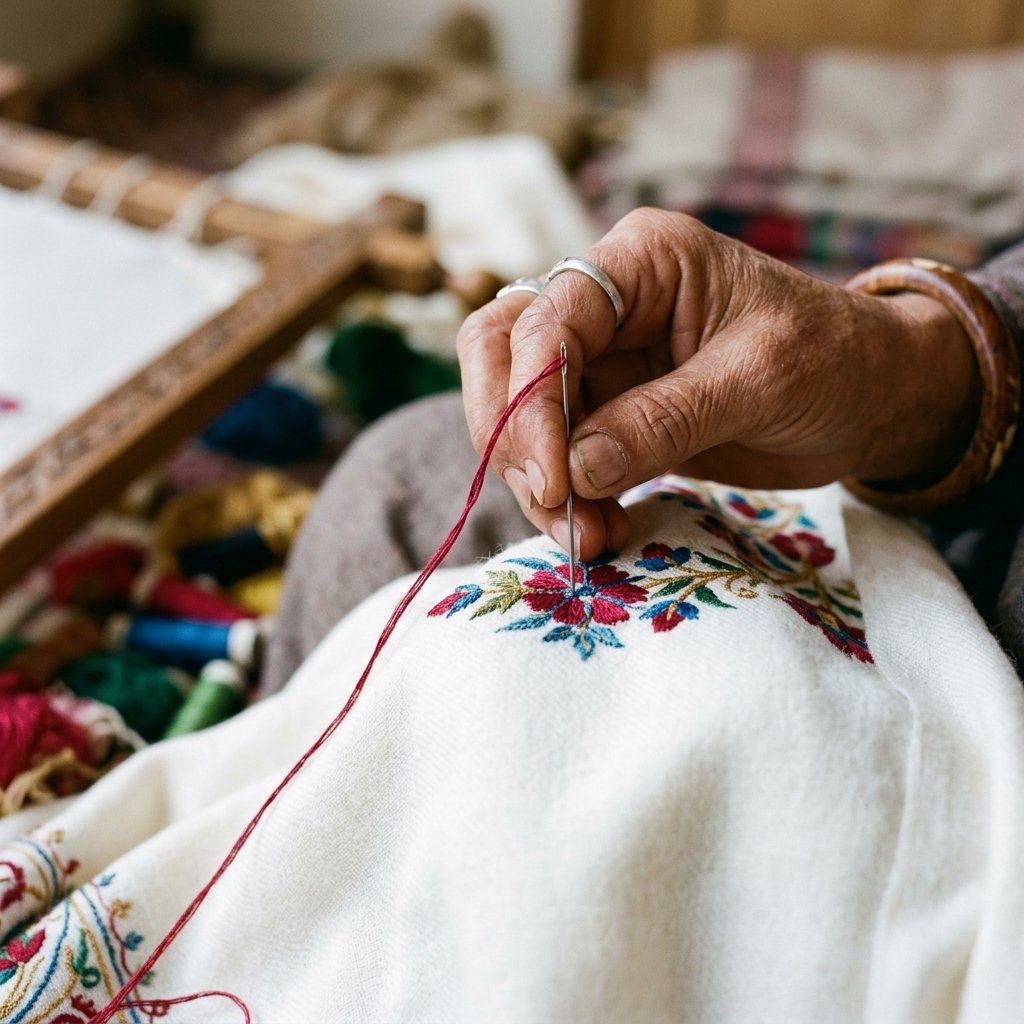
The Magic of Sozni Embroidery
When it comes to embellishing the delicate fabric of a Pashmina shawl, few techniques are as revered as Sozni embroidery. Sozni, or Suzani, is a traditional form of needlework that originated in Kashmir. It is renowned for its incredible fineness and detailed patterns, which often resemble a tapestry. Unlike other heavier forms of embroidery, Sozni is meticulously executed using a fine needle, ensuring that the delicate Pashmina fabric is not damaged or weighed down. The result is a breathtaking piece of art where the embroidery seems to be an intrinsic part of the fabric itself.
The Artisan's Canvas
The process of creating a Sozni masterpiece begins long before the first stitch is made. Once the Pashmina shawl is woven, it is washed and pressed to create a smooth canvas. A specialized artisan, known as a 'Naqash', then traces the design onto the fabric using carved wooden blocks dipped in a washable ink. These designs are often inspired by the stunning natural beauty of Kashmir, featuring motifs like the Chinar leaf, almond (Boteh or paisley), lotus flowers, and intricate geometric vines. The precision of the Naqash sets the foundation for the embroiderer's work.
The Stitching Process: A Meditative Craft
Once the design is stamped, the embroiderer takes over. This is where the true magic happens. Using silk or fine cotton threads, the artisan begins filling in the patterns with incredibly small, tight stitches. The thread colors are chosen carefully to create vibrant contrasts or subtle, sophisticated gradients. A single Sozni shawl can take an artisan months, or even years, to complete, depending on the density of the design. For 'Jamawar' shawls, where the entire surface is covered in embroidery, the artisan may work for up to three years on a single piece. The dedication and patience required are immense.
Types of Sozni Patterns
Sozni embroidery is categorized into various styles based on the density and layout of the design. 'Hashia' features a border running along the edges of the shawl. 'Boti' incorporates small, scattered floral motifs across the main body. 'Jaal' is a more complex, net-like pattern that covers a significant portion of the fabric. The most elaborate is the 'Jamawar', a dense, continuous pattern that covers the entire shawl, leaving almost no base fabric visible. Each style requires a different level of skill and time, making every Sozni shawl a unique expression of the artisan's vision.
Preserving the Sozni Tradition
The art of Sozni embroidery is a vital part of Kashmir's cultural heritage. The skills are traditionally passed down from generation to generation within artisan families. However, the craft faces challenges from cheaper, machine-embroidered imitations that flood the market. To truly appreciate and preserve this art form, it is crucial to support the artisans by choosing authentic, hand-embroidered pieces. When you wear a hand-embroidered Sozni Pashmina, you are not just wearing a garment; you are wrapped in the dedication, history, and soulful artistry of Kashmir.
The Magic of Sozni Embroidery
When it comes to embellishing the delicate fabric of a Pashmina shawl, few techniques are as revered as Sozni embroidery. Sozni, or Suzani, is a traditional form of needlework that originated in Kashmir. It is renowned for its incredible fineness and detailed patterns, which often resemble a tapestry. Unlike other heavier forms of embroidery, Sozni is meticulously executed using a fine needle, ensuring that the delicate Pashmina fabric is not damaged or weighed down. The result is a breathtaking piece of art where the embroidery seems to be an intrinsic part of the fabric itself.
The Artisan's Canvas
The process of creating a Sozni masterpiece begins long before the first stitch is made. Once the Pashmina shawl is woven, it is washed and pressed to create a smooth canvas. A specialized artisan, known as a 'Naqash', then traces the design onto the fabric using carved wooden blocks dipped in a washable ink. These designs are often inspired by the stunning natural beauty of Kashmir, featuring motifs like the Chinar leaf, almond (Boteh or paisley), lotus flowers, and intricate geometric vines. The precision of the Naqash sets the foundation for the embroiderer's work.
The Stitching Process: A Meditative Craft
Once the design is stamped, the embroiderer takes over. This is where the true magic happens. Using silk or fine cotton threads, the artisan begins filling in the patterns with incredibly small, tight stitches. The thread colors are chosen carefully to create vibrant contrasts or subtle, sophisticated gradients. A single Sozni shawl can take an artisan months, or even years, to complete, depending on the density of the design. For 'Jamawar' shawls, where the entire surface is covered in embroidery, the artisan may work for up to three years on a single piece. The dedication and patience required are immense.
Types of Sozni Patterns
Sozni embroidery is categorized into various styles based on the density and layout of the design. 'Hashia' features a border running along the edges of the shawl. 'Boti' incorporates small, scattered floral motifs across the main body. 'Jaal' is a more complex, net-like pattern that covers a significant portion of the fabric. The most elaborate is the 'Jamawar', a dense, continuous pattern that covers the entire shawl, leaving almost no base fabric visible. Each style requires a different level of skill and time, making every Sozni shawl a unique expression of the artisan's vision.
Preserving the Sozni Tradition
The art of Sozni embroidery is a vital part of Kashmir's cultural heritage. The skills are traditionally passed down from generation to generation within artisan families. However, the craft faces challenges from cheaper, machine-embroidered imitations that flood the market. To truly appreciate and preserve this art form, it is crucial to support the artisans by choosing authentic, hand-embroidered pieces. When you wear a hand-embroidered Sozni Pashmina, you are not just wearing a garment; you are wrapped in the dedication, history, and soulful artistry of Kashmir.
The Magic of Sozni Embroidery
When it comes to embellishing the delicate fabric of a Pashmina shawl, few techniques are as revered as Sozni embroidery. Sozni, or Suzani, is a traditional form of needlework that originated in Kashmir. It is renowned for its incredible fineness and detailed patterns, which often resemble a tapestry. Unlike other heavier forms of embroidery, Sozni is meticulously executed using a fine needle, ensuring that the delicate Pashmina fabric is not damaged or weighed down. The result is a breathtaking piece of art where the embroidery seems to be an intrinsic part of the fabric itself.
The Artisan's Canvas
The process of creating a Sozni masterpiece begins long before the first stitch is made. Once the Pashmina shawl is woven, it is washed and pressed to create a smooth canvas. A specialized artisan, known as a 'Naqash', then traces the design onto the fabric using carved wooden blocks dipped in a washable ink. These designs are often inspired by the stunning natural beauty of Kashmir, featuring motifs like the Chinar leaf, almond (Boteh or paisley), lotus flowers, and intricate geometric vines. The precision of the Naqash sets the foundation for the embroiderer's work.
The Stitching Process: A Meditative Craft
Once the design is stamped, the embroiderer takes over. This is where the true magic happens. Using silk or fine cotton threads, the artisan begins filling in the patterns with incredibly small, tight stitches. The thread colors are chosen carefully to create vibrant contrasts or subtle, sophisticated gradients. A single Sozni shawl can take an artisan months, or even years, to complete, depending on the density of the design. For 'Jamawar' shawls, where the entire surface is covered in embroidery, the artisan may work for up to three years on a single piece. The dedication and patience required are immense.
Types of Sozni Patterns
Sozni embroidery is categorized into various styles based on the density and layout of the design. 'Hashia' features a border running along the edges of the shawl. 'Boti' incorporates small, scattered floral motifs across the main body. 'Jaal' is a more complex, net-like pattern that covers a significant portion of the fabric. The most elaborate is the 'Jamawar', a dense, continuous pattern that covers the entire shawl, leaving almost no base fabric visible. Each style requires a different level of skill and time, making every Sozni shawl a unique expression of the artisan's vision.
Preserving the Sozni Tradition
The art of Sozni embroidery is a vital part of Kashmir's cultural heritage. The skills are traditionally passed down from generation to generation within artisan families. However, the craft faces challenges from cheaper, machine-embroidered imitations that flood the market. To truly appreciate and preserve this art form, it is crucial to support the artisans by choosing authentic, hand-embroidered pieces. When you wear a hand-embroidered Sozni Pashmina, you are not just wearing a garment; you are wrapped in the dedication, history, and soulful artistry of Kashmir.