The Origins of Pashmina
Pashmina, often referred to as 'soft gold', has a history as rich and intricate as the threads themselves. Originating from the high-altitude plateaus of the Himalayas, this exquisite craft has been the pride of Kashmir for centuries. The story of Pashmina begins with the Changthangi goat, a rare breed found in the Changthang region of Ladakh. These goats endure temperatures as low as -40°C, and to survive, they develop a thick, incredibly soft undercoat. When spring arrives, they naturally shed this coat, which is then carefully combed by nomadic herders. This raw wool, known as 'Pashm', is the foundation of genuine Kashmiri Pashmina.
The Golden Era of Weaving
The craft truly flourished during the reign of Zain-ul-Abidin in the 15th century. He is credited with introducing the art of weaving to Kashmir by bringing skilled artisans from Turkestan. Under his patronage, the local craftsmen adopted these new techniques and refined them over generations. During the Mughal era, Pashmina shawls became a symbol of royalty and prestige. Emperors like Akbar were known to be avid collectors, and the shawls were often gifted as diplomatic presents. The intricate motifs, such as the famous 'Boteh' (paisley), were developed during this time, drawing inspiration from the flora and fauna of the Kashmir valley.
The European Fascination
In the late 18th and 19th centuries, Pashmina shawls found their way to Europe, where they caused a sensation among the aristocracy. French Empress Josephine, wife of Napoleon Bonaparte, is said to have owned hundreds of these shawls, making them the ultimate fashion statement in Paris. The demand was so high that it led to the rise of imitation industries in places like Paisley, Scotland. However, the unmatched softness, warmth, and craftsmanship of the original Kashmiri Pashmina could never be truly replicated. The complex weaving process, done entirely by hand on traditional wooden looms, gave each shawl a unique character that machines could not reproduce.
The Weaving Process: A Labor of Love
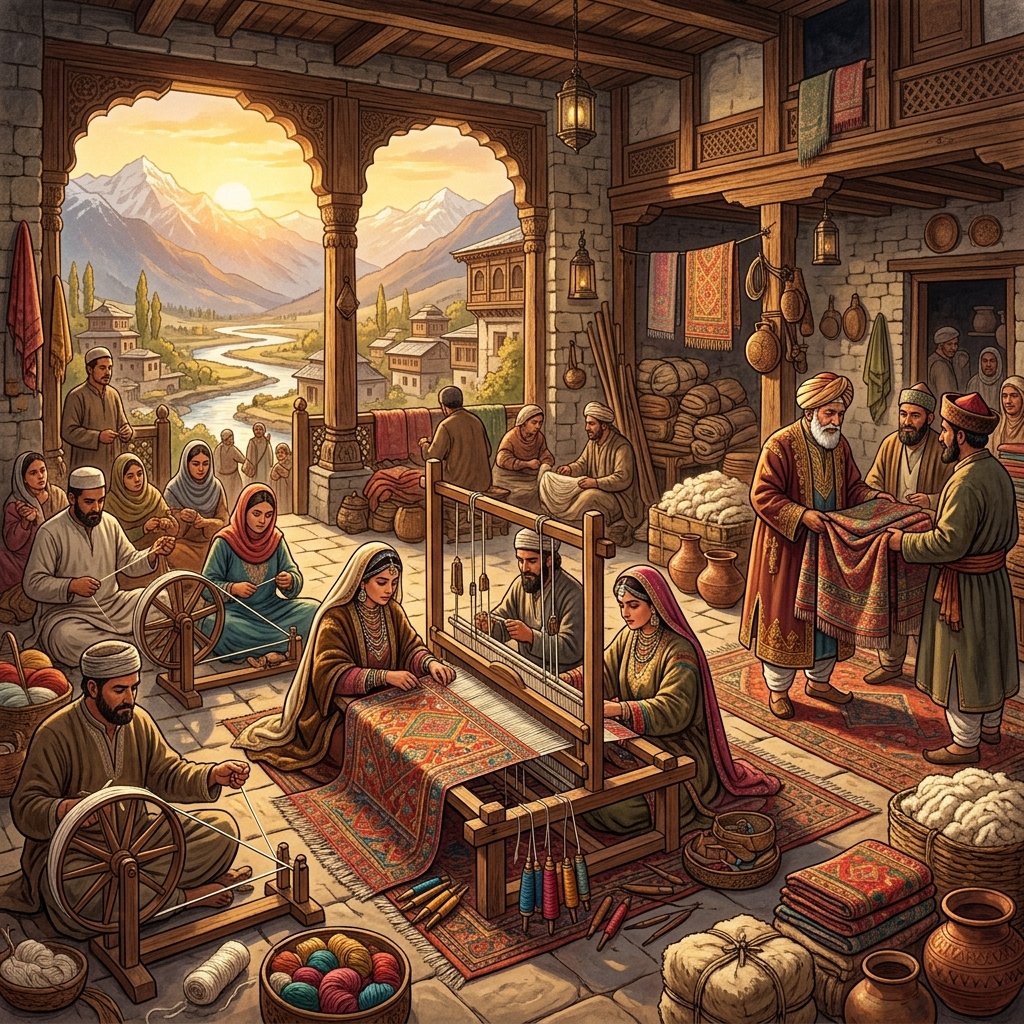
Creating a Pashmina shawl is an incredibly labor-intensive process that requires the skills of multiple specialized artisans. It begins with the sorting and cleaning of the raw Pashm, followed by spinning it into fine yarn using a traditional spinning wheel (Charkha). This delicate yarn is then dyed in vibrant colors before being mounted on the handloom. The actual weaving can take anywhere from a few days to several months, depending on the complexity of the design. The Kani weaving technique, for instance, involves using tiny wooden sticks (Kanis) to interlock differently colored threads, creating patterns directly into the fabric. It is a slow, meditative process that demands absolute precision and patience.
The Legacy Continues
Today, the art of Pashmina weaving is kept alive by dedicated artisan families in Kashmir who have passed down their knowledge through generations. Despite the challenges posed by modernization and machine-made imitations, there is a growing appreciation for sustainable, handcrafted luxury. True connoisseurs understand that a genuine Kashmiri Pashmina is not just an accessory; it is a piece of wearable art, carrying with it centuries of history, culture, and the soulful touch of the weaver's hands. By supporting authentic Pashmina, we ensure that this magnificent heritage continues to thrive for generations to come.
The Origins of Pashmina
Pashmina, often referred to as 'soft gold', has a history as rich and intricate as the threads themselves. Originating from the high-altitude plateaus of the Himalayas, this exquisite craft has been the pride of Kashmir for centuries. The story of Pashmina begins with the Changthangi goat, a rare breed found in the Changthang region of Ladakh. These goats endure temperatures as low as -40°C, and to survive, they develop a thick, incredibly soft undercoat. When spring arrives, they naturally shed this coat, which is then carefully combed by nomadic herders. This raw wool, known as 'Pashm', is the foundation of genuine Kashmiri Pashmina.
The Golden Era of Weaving
The craft truly flourished during the reign of Zain-ul-Abidin in the 15th century. He is credited with introducing the art of weaving to Kashmir by bringing skilled artisans from Turkestan. Under his patronage, the local craftsmen adopted these new techniques and refined them over generations. During the Mughal era, Pashmina shawls became a symbol of royalty and prestige. Emperors like Akbar were known to be avid collectors, and the shawls were often gifted as diplomatic presents. The intricate motifs, such as the famous 'Boteh' (paisley), were developed during this time, drawing inspiration from the flora and fauna of the Kashmir valley.
The European Fascination
In the late 18th and 19th centuries, Pashmina shawls found their way to Europe, where they caused a sensation among the aristocracy. French Empress Josephine, wife of Napoleon Bonaparte, is said to have owned hundreds of these shawls, making them the ultimate fashion statement in Paris. The demand was so high that it led to the rise of imitation industries in places like Paisley, Scotland. However, the unmatched softness, warmth, and craftsmanship of the original Kashmiri Pashmina could never be truly replicated. The complex weaving process, done entirely by hand on traditional wooden looms, gave each shawl a unique character that machines could not reproduce.
The Weaving Process: A Labor of Love
Creating a Pashmina shawl is an incredibly labor-intensive process that requires the skills of multiple specialized artisans. It begins with the sorting and cleaning of the raw Pashm, followed by spinning it into fine yarn using a traditional spinning wheel (Charkha). This delicate yarn is then dyed in vibrant colors before being mounted on the handloom. The actual weaving can take anywhere from a few days to several months, depending on the complexity of the design. The Kani weaving technique, for instance, involves using tiny wooden sticks (Kanis) to interlock differently colored threads, creating patterns directly into the fabric. It is a slow, meditative process that demands absolute precision and patience.
The Legacy Continues
Today, the art of Pashmina weaving is kept alive by dedicated artisan families in Kashmir who have passed down their knowledge through generations. Despite the challenges posed by modernization and machine-made imitations, there is a growing appreciation for sustainable, handcrafted luxury. True connoisseurs understand that a genuine Kashmiri Pashmina is not just an accessory; it is a piece of wearable art, carrying with it centuries of history, culture, and the soulful touch of the weaver's hands. By supporting authentic Pashmina, we ensure that this magnificent heritage continues to thrive for generations to come.
The Origins of Pashmina
Pashmina, often referred to as 'soft gold', has a history as rich and intricate as the threads themselves. Originating from the high-altitude plateaus of the Himalayas, this exquisite craft has been the pride of Kashmir for centuries. The story of Pashmina begins with the Changthangi goat, a rare breed found in the Changthang region of Ladakh. These goats endure temperatures as low as -40°C, and to survive, they develop a thick, incredibly soft undercoat. When spring arrives, they naturally shed this coat, which is then carefully combed by nomadic herders. This raw wool, known as 'Pashm', is the foundation of genuine Kashmiri Pashmina.
The Golden Era of Weaving
The craft truly flourished during the reign of Zain-ul-Abidin in the 15th century. He is credited with introducing the art of weaving to Kashmir by bringing skilled artisans from Turkestan. Under his patronage, the local craftsmen adopted these new techniques and refined them over generations. During the Mughal era, Pashmina shawls became a symbol of royalty and prestige. Emperors like Akbar were known to be avid collectors, and the shawls were often gifted as diplomatic presents. The intricate motifs, such as the famous 'Boteh' (paisley), were developed during this time, drawing inspiration from the flora and fauna of the Kashmir valley.
The European Fascination
In the late 18th and 19th centuries, Pashmina shawls found their way to Europe, where they caused a sensation among the aristocracy. French Empress Josephine, wife of Napoleon Bonaparte, is said to have owned hundreds of these shawls, making them the ultimate fashion statement in Paris. The demand was so high that it led to the rise of imitation industries in places like Paisley, Scotland. However, the unmatched softness, warmth, and craftsmanship of the original Kashmiri Pashmina could never be truly replicated. The complex weaving process, done entirely by hand on traditional wooden looms, gave each shawl a unique character that machines could not reproduce.
The Weaving Process: A Labor of Love
Creating a Pashmina shawl is an incredibly labor-intensive process that requires the skills of multiple specialized artisans. It begins with the sorting and cleaning of the raw Pashm, followed by spinning it into fine yarn using a traditional spinning wheel (Charkha). This delicate yarn is then dyed in vibrant colors before being mounted on the handloom. The actual weaving can take anywhere from a few days to several months, depending on the complexity of the design. The Kani weaving technique, for instance, involves using tiny wooden sticks (Kanis) to interlock differently colored threads, creating patterns directly into the fabric. It is a slow, meditative process that demands absolute precision and patience.
The Legacy Continues
Today, the art of Pashmina weaving is kept alive by dedicated artisan families in Kashmir who have passed down their knowledge through generations. Despite the challenges posed by modernization and machine-made imitations, there is a growing appreciation for sustainable, handcrafted luxury. True connoisseurs understand that a genuine Kashmiri Pashmina is not just an accessory; it is a piece of wearable art, carrying with it centuries of history, culture, and the soulful touch of the weaver's hands. By supporting authentic Pashmina, we ensure that this magnificent heritage continues to thrive for generations to come.